

![The $25,000 Value Marketing Strategy for 2024 [FREE]](https://ad.wrstrend.com/wp-content/uploads/2024/04/Ultimate-2024-Marketing-Plan-Free-1-900x450.webp)
- 2024-04-30
- ELSAYED ELISSAWI
- (0)
- Uncategorized
The $25,000 Ultimate Marketing Plan Template For 2024 [FREE]
Welcome to the forefront of marketing innovation!
Our 2024 Marketing Playbook, valued at $25,000, is now available for free. At ad.wrstrend.com, we’re not just about ideas; we’re about actionable strategies that turn prospects into profits.
Inside this playbook, you’ll find a meticulously crafted marketing plan template designed for the year’s challenges and opportunities. It’s a comprehensive guide that empowers you to:
- Design a Marketing Plan for 2024: With our step-by-step approach, you’ll craft a plan that captivates and converts.
- Master Your Budget: Keep your finances on track with our robust budgeting tools, tailored for 2024’s market dynamics.
- Leverage Smart Calculators: Make informed marketing decisions with our suite of analytical tools.
- Access the Ultimate Toolkit: Stay ahead with the latest marketing tools and strategies curated for 2024’s landscape.
Whether you’re a budding marketer or a seasoned pro, our playbook is your ticket to setting clear goals, understanding your audience intimately, outsmarting the competition, and managing your budget like a boss. Plus, with our tracking tools, you’ll measure your success and adapt with agility.
Transform your marketing approach with our 2024 Marketing Playbook.
Download your free copy today and join the ranks of marketing leaders!”

Part 2: Marketing Plan Basics
Now that you’re armed with your free marketing plan template, let’s delve into some fundamental concepts before tackling the more advanced aspects of marketing planning.
What is a Marketing Plan?
Think of a marketing plan as your roadmap to marketing success. It’s a comprehensive document outlining your strategies and tactics for a specific timeframe. It provides a clear picture of your current marketing situation and lays out your future plans for achieving your goals.
Marketing Plan vs. Business Plan: What’s the Difference?
A marketing plan can be a crucial piece of your overall business plan. A well-defined online marketing strategy forms the foundation of a strong marketing plan.
Here’s the key distinction: a business plan typically outlines your entire business strategy, while a marketing plan focuses specifically on your marketing strategies and actions.
Even though a marketing plan details specific actions, it loses effectiveness without a solid strategic foundation.
This foundation translates into a set of concrete marketing tasks and tactics that guide your execution.
Why Do You Need a Marketing Plan?
There are countless reasons why every brand and marketing team needs a solid marketing plan. Let’s explore the top three:
1- Setting Clearer Goals:
Having specific marketing goals empowers you to strategize and plan for success. The difference lies in the type of goals you set.
Vague goals like “growing my business” lack direction. In contrast, measurable KPIs (Key Performance Indicators) like “I want to increase revenue by $850,000 this year. To achieve this, I need to acquire 1,000 new customers” provide a clear roadmap for action.
Measurable KPIs allow you to plan exactly what steps you need to take to reach your target.
We highly recommend setting SMART goals – goals that are Specific, Measurable, Achievable, Relevant, and Time-Bound.

2- Sharpen Your Focus: Why Laser-Targeted Marketing Matters
Marketing without a clear focus can be like throwing spaghetti at a wall and hoping it sticks – messy and ultimately ineffective.
Imagine running a company meeting with no agenda; chaos would ensue. Marketing is no different. It thrives on focus.
Our golden rule? Concentrate on specific, well-executed activities.
A well-crafted digital marketing plan helps you identify and prioritize the tasks that will significantly impact your success.
Naturally, circumstances evolve, and your plan needs to adapt as well.
But with a solid marketing plan outline as your guide, you can stay ahead of the curve.
By keeping next month’s tasks clearly defined, you ensure your marketing efforts are laser-focused and maximize effectiveness.

3- Consistency is Key: The Power of Long-Term Commitment
A marketing plan serves as the central nervous system of your marketing efforts, ensuring all activities are relevant, timely, and contribute to achieving your organization’s business objectives. It acts as a roadmap, charting a course towards a sustainable competitive advantage and outlining the resources required to reach that position.
Now that you have a solid understanding of what a marketing plan is and its purpose, let’s delve into the critical components that form its foundation.
How do you make a good marketing plan?
A good marketing plan should have the following parts –
Executive Summary:
- Think of this as the “quick facts” section. It summarizes your entire marketing plan.
- Include essential details like your company’s name, mission, and where it’s based.
- Highlight your main objectives, KPIs (key performance indicators), and budget.
Mission Statement:
- Describe your company’s purpose and what you aim to achieve.
- Keep it concise and inspiring.
Market Analysis (SWOT):
- SWOT stands for Strengths, Weaknesses, Opportunities, and Threats.
- Analyze your business internally (strengths and weaknesses) and externally (opportunities and threats).
- Understand your competitive landscape.
Competitor Analysis:
- Identify your competitors and study their strategies.
- Learn from their successes and failures.
Target Market & Buyer Personas:
- Define your ideal customers. Who are they? What do they need?
- Create detailed buyer personas to guide your marketing efforts.
Marketing Objectives and KPIs:
- Set clear goals. For example, increasing website traffic by 20% or gaining 1,000 new customers.
- Use SMART goals: specific, measurable, achievable, relevant, and time bound.
Pricing Strategy:
- Decide how you’ll price your products or services.
- Consider factors like value, competition, and customer perception.
Growth Strategy:
- Outline how you’ll expand your business. Will you focus on new markets, product development, or acquisitions?
Marketing Channels:
- Choose the platforms where you’ll reach your audience (social media, email, content marketing, etc.).
The Budget:
- Allocate resources (money, time, personnel) to your marketing efforts.
- Be realistic and track expenses.
Bonus Sections:
11. How to Assemble the Right Marketing Team:
– Discuss roles, skills, and collaboration within your marketing team.
– Highlight the importance of teamwork.
Top Tools for Marketing Plan Creation & Design:
- Explore tools that simplify planning and design.
- Look for user-friendly options.
Remember, a well-organized marketing plan ensures everyone is on the same page and helps you achieve your business goals.
Each of these key elements is vital for the right execution of your marketing strategy and I promise you it’s not as difficult as it looks.
Let’s dive in.
2- Crafting Your Mission Statement: The Real Deal
Next up in your marketing playbook is the big “why” – your mission statement.
Here’s the scoop on making it count:
1. The Mission Statement Breakdown A rock-solid mission statement’s got three parts:
- The big dream, the vision of your company.
- The core values that you stand by.
- The goals and marketing moves you’re aiming for.
Keep it tight, punchy, and to the point. Skip the novel-length write-up and the buzzword bingo. And hey, chat with your team – their two cents matter big time.
Their take on the mission’s gotta jive with the day-to-day hustle, so everyone’s rowing in the same direction.
2. Vision vs. Mission: What’s the Diff? Think of the vision as your North Star, the grand plan that gets you out of bed in the morning. The mission?
That’s your game plan, the steps you’re taking to make that vision happen.
And if you wanna dive deeper, Simon Sinek’s got this killer video that nails the whole vision-mission thing.
It’s a must-watch if you’re all about getting your company’s “why” on point.
Part 3 – From Vision to Achievement: Step-by-Step Market Analysis
Got a vision for your business? Great! Now let’s map out how you’re gonna turn that into reality.
Step 1: Know Your Battlefield Before anything else, you need to understand your market and industry. It’s like knowing the rules of the game before you play.
Step 2: Market Analysis Explained Ever tuned in to “Shark Tank”?
The pitchers start with their personal story and their “why” – that’s the vision and mission of their company.
It’s what hooks the Sharks and the audience.
Then comes the market size – they lay out just how big the opportunity is.
They’re not just throwing numbers; they’re painting a picture of potential profits.
And that’s what market analysis is all about.
It’s your chance to show you know your stuff and that your vision isn’t just a daydream.

From Vision to Achievement: Step-by-Step Market Analysis
Continuing with our market analysis, let’s dive into the SWOT framework, a tool that gives us a 360-degree view of where our business stands in the marketplace.
SWOT Analysis: Your Business Compass
Strengths
- What’s your company’s superpower?
- What do you do better than anyone else?
- What’s your secret sauce, the thing that sets you apart from the crowd?
- What are the ace cards you’ve got up your sleeve that the competition can’t match?
- Think about your value proposition. What promises are you making to your customers that they can’t get elsewhere?
- Reflect on your key resources, processes, and capabilities. What’s in your toolkit that gives you an edge?
Weaknesses
- Where are the chinks in your armor? Every business has them.
- What areas need a little TLC to level up your game?
- Be honest about where you’re lagging behind the competition. It’s the first step to improvement.
Opportunities
- What’s trending?
- What’s the buzz in the market that you can ride on?
- Look at demographic shifts, lifestyle changes, population growth, or new laws that could play to your advantage.
- Opportunities are your ticket to leapfrogging the competition. Spot them, and you’re golden.
Threats
- What storm clouds could rain on your parade? It’s not pessimism; it’s being prepared.
- Keep an eye on environmental factors, market shifts, or new regulations that could throw a wrench in your works.
- Remember, forewarned is forearmed. Knowing potential threats helps you dodge bullets.

Continuing with our journey from vision to achievement, let’s talk about sizing up the competition.
Part 4- Competitive Analysis: Know Your Rivals
Pro tip: Ready to tackle your own SWOT analysis? Grab a Marketing SWOT Analysis Template to get started.
Understanding your competition is crucial. It’s like knowing who else is running the race and figuring out how to outpace them.
Here’s what you need to focus on:
Identifying the Competition
- Who’s playing in your league? Who are the big players, the up-and-comers, the niche experts?
Decoding Their Strategies
- What’s their game plan? Look at their marketing campaigns, social media presence, customer engagement tactics.
Understanding Their Goals
- What are they shooting for? Increased market share, brand awareness, product innovation?
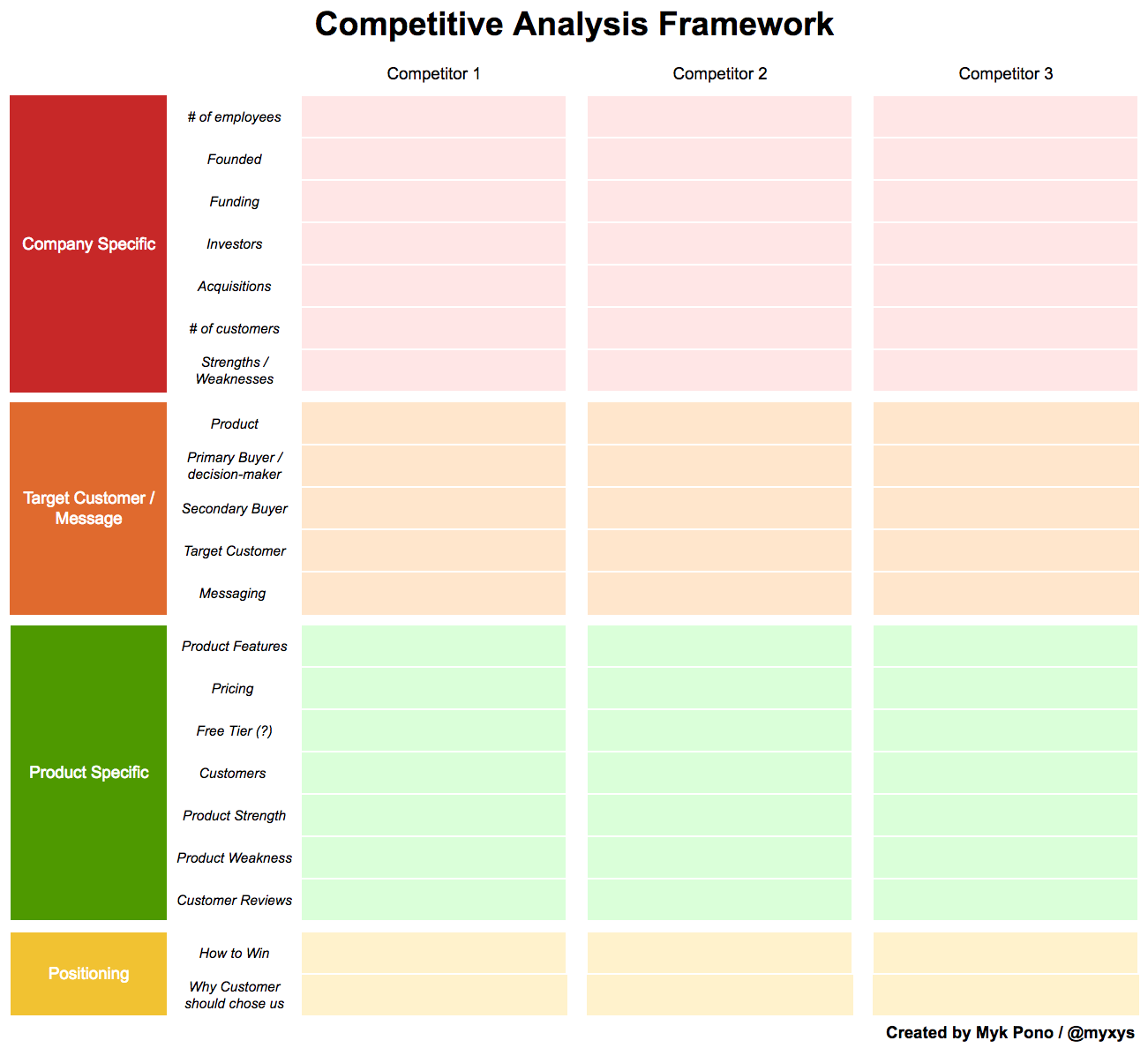
Myk Pono’s Competitive Analysis Framework
This framework is a gem for breaking down your competitors’ moves. It helps you see not just what they’re doing, but why they’re doing it, and how effective it is.
Alright, you’ve scoped out the competition. Now it’s time to get up close and personal with your future customers.
Part 5 – Pinpoint Your Target Market and Buyer Personas
Crafting Buyer Personas
- The secret sauce? A customer journey map. It’s a visual story of every single step a customer takes with your brand.
- This isn’t just a part of your strategy; it’s the heart of it.
Understanding the ‘Moment of Truth’
- Google’s got this concept called the “moment of truth.” It’s all about the instant when shoppers find your product and think, “This is it!”
- Whether they’re scrolling online or walking the aisles, that Zero Moment of Truth (ZMOT) is your make-or-break moment.

Identifying the specific problem that the customer is looking to solve is critical. This is how you define your persona and this is what ultimately affects the rest of your marketing decisions.
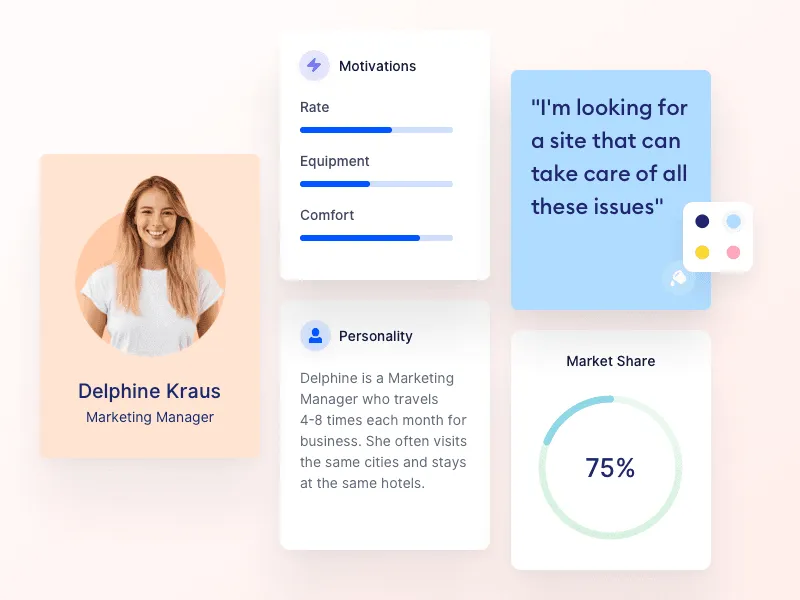
Hubspot’s Buyer Persona Template Check out this top-notch buyer persona template from Hubspot. It’s gonna help you whip up better audience personas.
Part 6 – Define Your Goals and KPIs
First things first, when you’re building a marketing plan, you gotta understand and define the business goals you’re aiming for with this plan. Don’t forget, business and marketing are two sides of the same coin.
Here are some questions you gotta answer:
- What business goals am I trying to hit?
- What KPIs will help me nail those goals?
- What’s my marketing funnel look like?
Pricing Strategy
Pricing usually falls under the market and competitive analysis sections, but sometimes brands give it its own section. It all depends on how much weight price carries for your business and how cutthroat your market is.
For instance, if your product being way cheaper than your competition is a big win for your business, then a pricing strategy is gonna be a major player in your marketing plan. But if you’re a brand like Apple that’s more about quality and other features than just price, then you’re not gonna focus as much on price.
There are 5 common pricing strategies:
Cost-based Pricing This is when the price is based solely on the cost of the products. The company just takes the cost to produce the product or service and adds a markup.
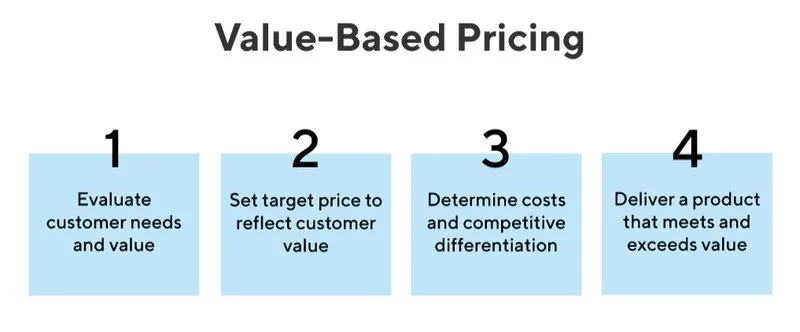
Value-based Pricing This strategy is based on the perceived value of your product. A good example here is a company like Apple that prices its products way higher than its competitors because of the perceived value they provide.
3- Competitive Pricing
This is when a company sets a price based on what the competition is charging. A good example here is gas stations. Each gas station competes with the other stations on the block, trying to outbid the other.
4- Price Skimming
This strategy involves setting a high price and then lowering it as the market evolves. A lot of tech products have a high price when they first launch to maximize profit and increase their perceived value.
5- Penetration Pricing
Penetration pricing is the exact opposite of price skimming. It involves pricing a product really low at first to break into a competitive market, and then slowly increasing the price over time.
Part 7 – Fit Your Pricing Strategy to Your Target Customers
It’s important to match your pricing strategy to the specific customer segment you’re trying to reach. If you’re marketing to early adopters, then price skimming will work.
If you want to be adopted by the early or late majority, then you may have to try penetration pricing. You can always use customer feedback to get more data on this and make a better decision.
As you can see, there are a lot of different pricing strategies out there. Picking the right one for your business will depend on the previous steps in your marketing plan – the customer (or buyer) pain point, the market analysis, and the competitive analysis.
Part 8 – Define Your Marketing Budget
Your marketing budget plan depends on your business stage. Much like marketing goals and KPIs, your budget planning depends on your business lifecycle stage (are you a startup or an established brand). Normally, startups invest more in gaining market share and acquiring new customers, whereas established brands would invest more in retention and reputation.
Your niche is also a factor. Each industry has a different marketing structure and consumer behavior, so your niche defines your marketing budget allocation as well. eCommerce in a competitive niche like fashion, for example, will need ways to lower its CAC (customer-acquisition-cost) and upsell.
Spending Tipping Point
You can’t expect that if you invested $25,000 and got 1,000 leads to keep the same proportion at $250. Every channel should have a different amount allocated to it based on the return on investment (ROI) and your profit margins.
So make sure you invest enough into each channel to move the needle.
You can benchmark with other businesses in your niche or use a rule-of-thumb by which at least 20% of your expected revenue should be invested in marketing.

Unlock the Power of B2B PPC Advertising
Lead Generation and Branding
Start Planning Your Budget
The first step when planning your marketing budget is to understand what growth channels have worked for you so far and are part of your digital marketing strategy for the next year. Based on each channel’s effectiveness and cost, you can start allocating your monthly and yearly spend.
Here are some questions you should answer:
- What are the most effective growth channels I have so far?
- Are there more growth channels I want to test next year?
- Does seasonality affect my sales?
Remember to align your budget with your KPIs!
Part 9 – Define Your Marketing Channels
Now that you’ve identified what and how to spend your marketing dollars, it’s time to pick the marketing channels that you will be using to grow your business.
It’s important to decide on the specific marketing mix that’s best for your business. Social media platforms and other marketing channels have absolutely exploded in the last decade so you got a ton of channels to choose from.
Remember to have an authentic brand presence on every channel and only expand to ones that fit your brand strategy. Here are some of the top ones that you should consider for your marketing plan template:
Content Marketing
Content marketing is super powerful for inbound marketing. Studies show that 60% of marketers create at least one piece of content per day and the year-over-year growth in traffic is 7.8X higher for content leaders.
Companies like Capterra and Quuu attribute their success to really good content.
Remember, content is a long-term game, short-term wins are very rare. You should create, design, and post content consistently and continue to optimize.
Social Media
Social media is another powerful marketing aspect of any brand’s marketing strategy. It provides an opportunity for you to present your brand in a visual way through images and videos.
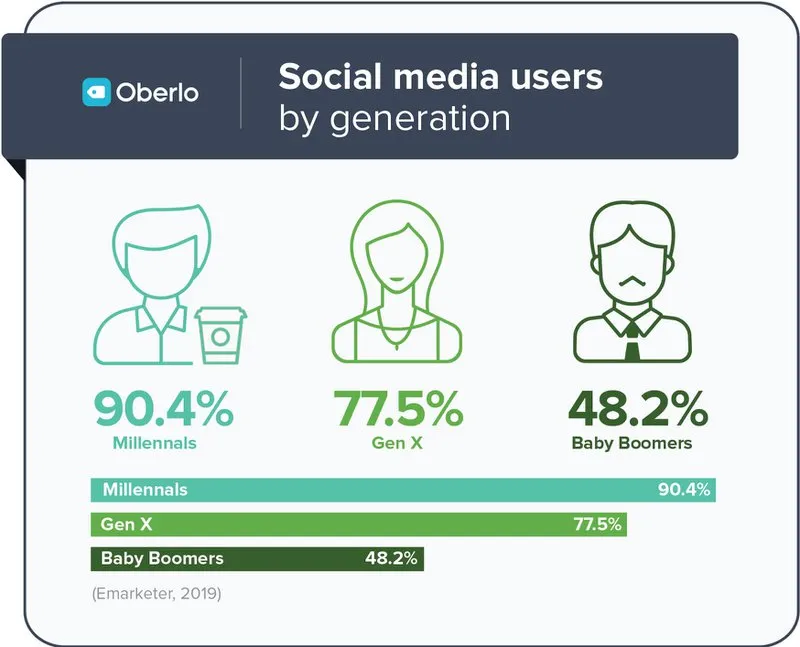
Studies show that 90.4% of Millennials, 77.5% of Generation X, and 48.2% of Baby Boomers are active social media users, so don’t ignore these platforms if your brand isn’t “sexy” enough.
Gary Vaynerchuk’s Advice
Marketing guru Gary Vaynerchuk has always said that even brands in the construction or plumbing industries should definitely post content and interact with their audience on social media. If you bring value to people, you’ll generate leads that will eventually turn into sales.
Want to boost your engagement and traffic from social?
Email Marketing
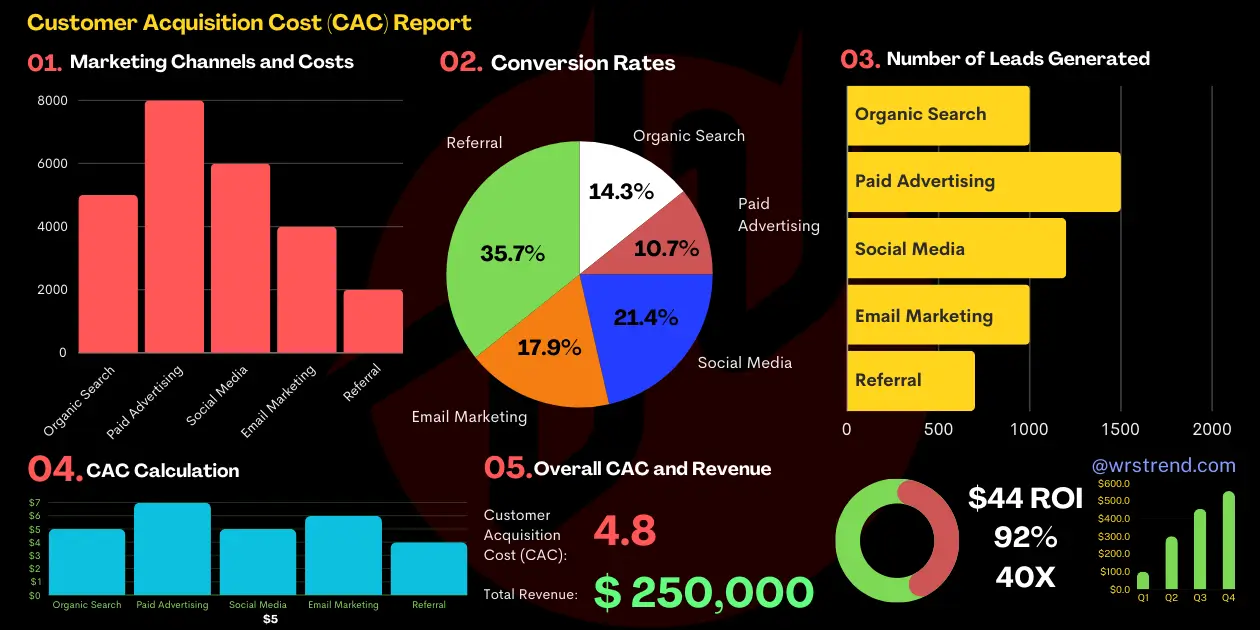
Email marketing is the king of the marketing kingdom with the highest ROI of any marketing channel. Studies show that marketers rake in $44 for every $1 they spend on email marketing. That’s 40X more effective than using social media to generate sales.
Email Marketing for B2C and B2B
If you’re a B2C company, this is a must. You should be sending out weekly or biweekly campaigns, setting up automatic welcome and cart abandonment flows, and definitely setting up some email automation for the customers that convert through a popup.
If you’re mainly B2B, you might think that email marketing isn’t as powerful for you, but that’s absolutely not the case.
According to WordStream, 59% of B2B marketers say that this is the most effective way to generate sales.
Another great way to use this channel is for branding. For example, a lot of companies leveraged the global COVID pandemic to engage in new ways with their target customers. They used really creative ways to send really helpful and cheerful emails that helped lift people’s spirits.
Advertising
Last but not least, there’s advertising. This is our specialty here at Mayple.
We have over 1,500 talented ads experts that we match with the brands that we work with. Advertising is an important aspect of your marketing strategy that you should absolutely have on your digital marketing plan template.
There are several ways you could utilize advertising as a marketing channel.
First, there is social advertising. You could advertise on platforms like Facebook, Instagram, Snapchat, Pinterest, LinkedIn, and Quora. Then there are Google Ads that come in the form of PPC, or you could use a tool like Taboola or Outbrain to leverage Google’s Display Network.
You could also retarget your site visitors using ads on any of these networks. This type of advertising is particularly effective and we recommend it to all the brands that we work with.
Part 10 – Define Your Growth Strategy
After you’ve set your marketing goals, KPIs, and budget, it’s time to plan your marketing activities for this year! Ready? 💪
Planning Your Marketing
After you figured out what channels you’re going to invest in, the marketing plan should show all the activities you’re going to run under each growth channel.
Here are some examples you can use:
Paid Media Marketing Campaigns
To plan and design your paid campaigns correctly you should know what are the most effective channels you are going to start using and to build a marketing funnel that shows you when are you going to advertise to “first-touch” prospects (people that don’t know you yet) and what will remarketing prospects will want to see in order to be persuaded to take the next move.
Now, plan the marketing activities for each of your marketing funnel stages (from the awareness stage to the decision stage) and prospects’ journeys from the setup stage to the live campaign stage. You can also add special events and design seasonal promotions in your paid campaigns such as sales season and other special occasions.
Content Strategy & Distribution
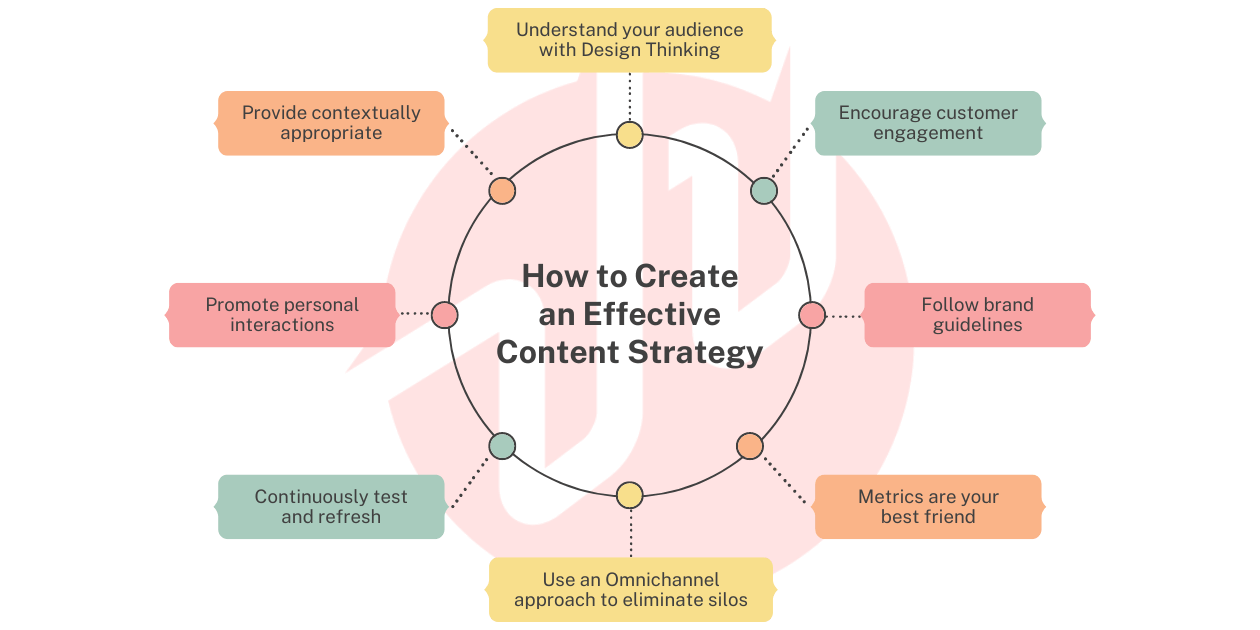
Content marketing is all about connecting with your customer base and potential buyers at every level of the funnel. An effective content distribution strategy should take into consideration the types of content you want to publish and the ideal distribution channels for your potential customers at each stage of the marketing funnel.
Another important thing to remember about content is consistency.
Don’t plan your content on social channels if you won’t have the resources to be consistent with your posting. It’s better to focus on fewer things and do them well. Content can include any valuable engagement you have with your audience, whether it’s on your Facebook, on a blog post, or in your email marketing.
Some of your content efforts will be ongoing (for example, SEO) and some will be building assets for future use (for example, Video).
Offline / Local
Ok, so we’ve covered all the aspects of an effective marketing plan.
Part 11- BONUS: How Do You Build the Perfect Marketing Team?
As we all know, marketing management can be lonely (at every size of business by the way), so a crucial factor in your marketing success is building a good team to execute your marketing plan. It can be an in-house team, a team of experts you hire, or as in most cases, a hybrid of in-house employees combined with marketing service providers (agencies or freelancers).

3 Fundamentals of a Good Marketing Team
Here are the three top elements of a really effective marketing team.
Leadership
First off, a good marketing team depends first and foremost on its leader (Yeah, that’s you!).
When you pick the right people and know how to manage them right, your success rates are already looking good. At the end of the day, good marketing starts with a good strategy, continues with a reasonable plan, and depends on great execution.
Expertise Blend
Your strategy and plan need specific human capabilities, so they’ll be executed well. If you’re planning on running paid media campaigns, you better kick off your year with an expert on your team that knows the job and that you can count on to deliver on your expectations.
To decide whether to hire an in-house employee or a service provider, you should consider two things: What’s more important for you – flexibility or control? Do you have access to…
In my experience, experienced marketing professionals either demand very high salaries or work independently / in small agencies (for example, ecommerce SEO agencies).
Measurement and Performance
We’re back talking about your Key Performance Indicators (KPIs), and so should you in every marketing decision you make.
After you made sure you have all the needed resources in terms of human talent to get your plan running, you’ll need to keep tracking, measuring, and motivating them to stay focused on achieving your goals and KPIs.
Not an easy task, especially when you need to measure both in-house employees and service providers.
It’s important to understand what KPIs are relevant to each of your team members, and how to run these tracking sessions in a way that will bring everyone together to achieve better results for your business.
Questions to Ask
Questions to assess their experience, with respect to your unique business requirements:
- What industry-relevant experience do you possess?
- What kinds of campaigns have you previously managed?
- Can you show me some examples?
Questions that assess their ability to build the campaign strategy you need:
- How do you plan a campaign?
- How do you decide on each campaign’s distribution?
- Do you A/B test different campaign messages?
Questions about reporting and KPIs – clear expectations!
- Which KPIs do you think are relevant to us?
- Which KPIs do you expect to reach?
- Which reporting format do you use?
- What would be the frequency of the reports you generate?
Excellent. You now know how to assemble your marketing team.
And you might be asking yourself, how do I write this marketing plan?
It’s going to take me ages!
There is so much research that goes into it, do I have to do it all manually?
The answer is no way!
There are a ton of marketing tools & software that can help you create your actionable marketing plan way faster.
Here are a few.
Unlock the Power of B2B PPC Advertising
Part 12- BONUS: What Are the Best Tools to Use to Create a Marketing Plan?
Here are some of the top marketing tools to use to create your marketing plan.
Tools for Research
There are numerous tools to use to obtain all the market research and business analytics for your marketing plan.
Alexa
Alexa is a great tool to get insights into your market and your competitors. It has some really advanced features that can show you your site demographics, where your traffic comes from, and the traffic sources of your competitors.

SimilarWeb
Similarweb is another great tool for research. It’s like Alexa in that it has some very similar features but has more reporting capability, and has other metrics like geography, referring sites, and SEO metrics.

Ahrefs
Ahrefs is one of the top SEO tools out there. It can give you some of the most sophisticated information about the types of backlinks you or your competitors have, search engine rankings, and much more.

Tools for collaboration
Basecamp
Basecamp is a great tool for team collaboration. You can use it to message your team, store and organize project files efficiently, and work better with your team. There are so many data points to gather for your marketing plan and you will need to collaborate with multiple teams in your company.

Slack
Slack is another great tool for team collaboration. Though it’s more focused on communication it does provide a great way to store information and collaborate with co-workers (and it has a slick design and an easy-to-use interface).

Speaking of design, let’s talk about visual design tools and software for your marketing plan.
Tools for charts and presentations
Lucidchart
This is a great design tool for making charts. They have a really easy-to-use drag and drop design interface that allows you to create fancy charts and diagrams for your marketing plan in minutes.

Canva
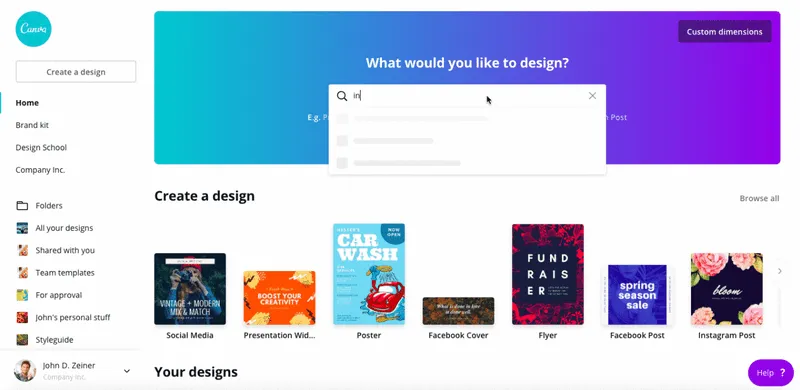
Canva is a great design tool for all kinds of design projects. It has a wide range of features that you could use to design amazing graphics and download them for your marketing plan.
Part 13- BONUS: Top marketing plan examples
There are so many areas of digital marketing and if you want to be really efficient you should make a plan for each one. The best way to learn is from the experts so let’s look at some of the best sample marketing plans. You can download any of these or save a copy for yourself.
Content Marketing Strategy Template – by Buffer
This is a really great plan for your content. It breaks down every process from discovering your ideal customers, to creating their buyer persona, finding the main challenges that your content could solve, and so on. This is a really in-depth guide designed for any content marketing out there.

Simple Marketing Plan – from Cengage
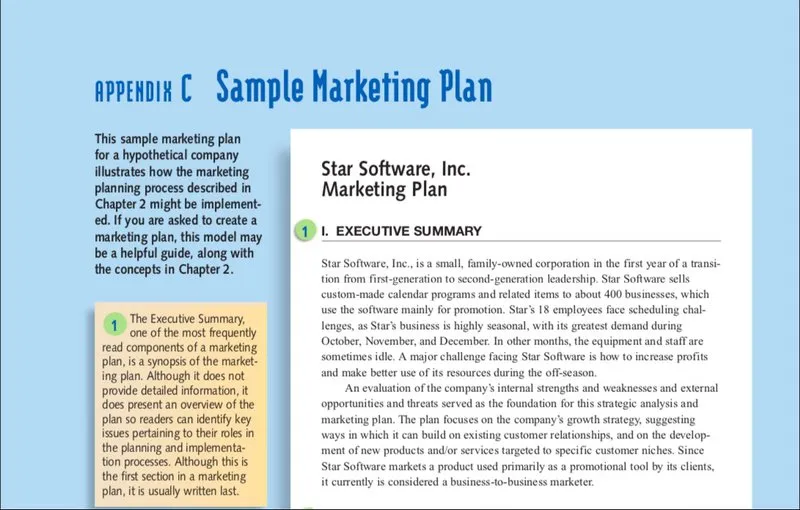
Here’s another really great marketing plan example. This one looks really old school, so if you are a visual learner this one is probably not for you. But if you want to see a really well-written explanation of every section of a traditional marketing plan, you will get a lot of this example. Download it and fill it out, you will get a lot of value out of it.
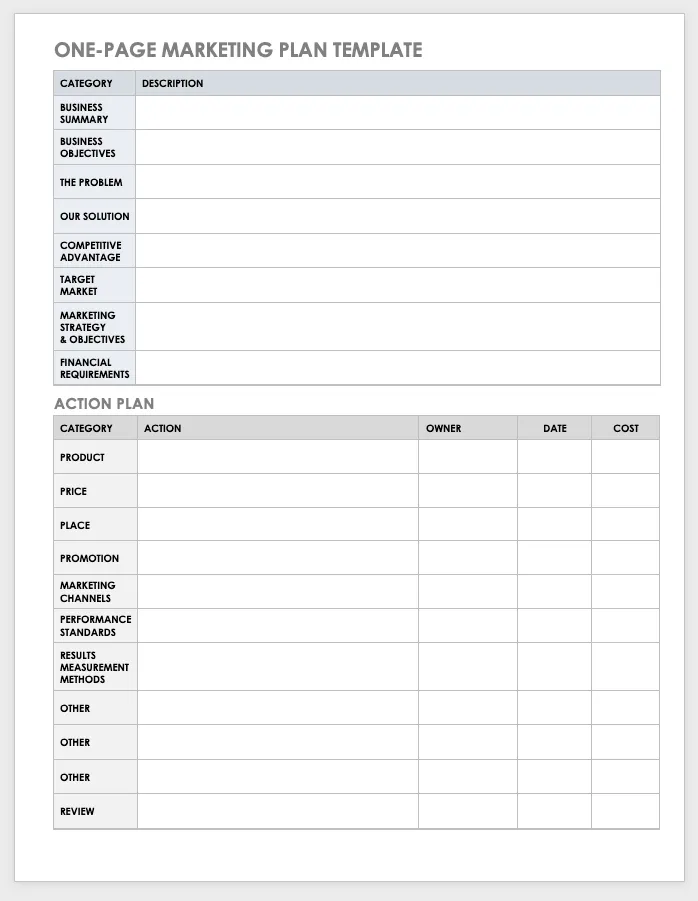
One Page Marketing Plan Template – from SmartSheet
Ok, if that wasn’t simple enough for you, here’s a quick one-page cheat sheet that you can use to quickly summarize your entire marketing plan. This one is really useful for a quick brainstorming session, especially when working with a remote team.
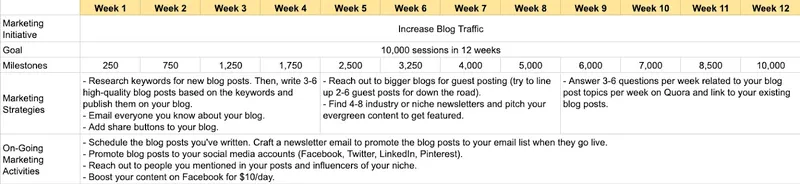
Marketing Strategy Template for Increasing Blog Traffic – from Sumo
Sumo has some incredible marketing plan templates. I used one of their templates to grow an Instagram account from 0-30k subscribers in 18 months. And here they strike again with a super-specific template & strategy on how to take your blog traffic to 10,000 visits in just 12 weeks.
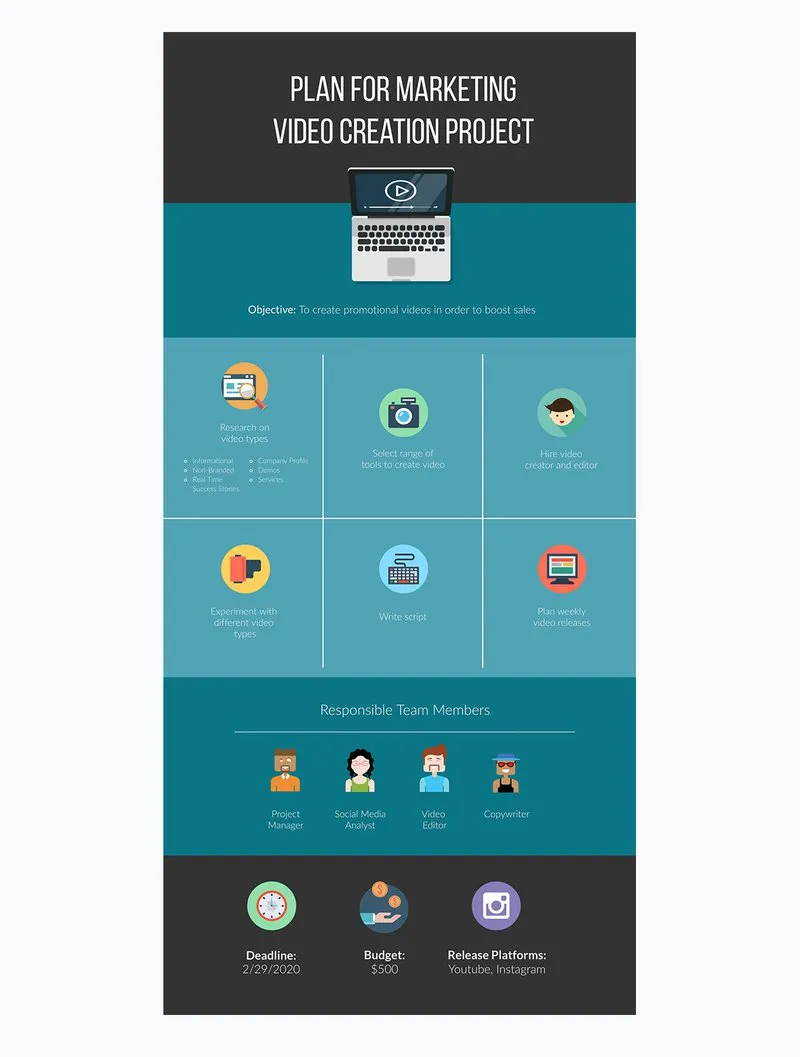
Marketing plan infographic for specific projects – from Visme
Speaking of content, let’s talk about video.
Creating a video strategy for a brand can be a pretty complex task. You have a bunch of teams, a variety of factors to consider, and it can become a big mess pretty quickly. So, if you want to create a strategic marketing plan template for a specific project like that, then use this infographic template from Visme to display everything and make it all really easy for the whole team to follow.
This format is especially powerful when you’ve hired a digital marketing consultant because that’s when things can get a little unclear. So, organizing every project into a quick infographic can provide a really great way to keep everyone organized.
Email List Marketing Strategy Template
An email list is one of the most powerful tools any business has. It’s really hard to grow your list and keep subscribers engaged. Here’s a great marketing plan example for growing a list to over 1,500 new subscribers in 12 weeks.
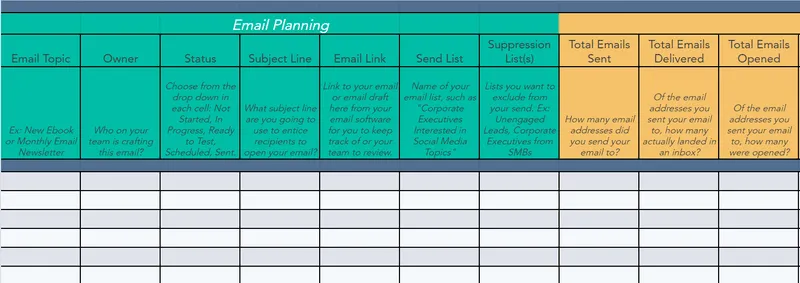
eCommerce Marketing Plan Example – from Drip
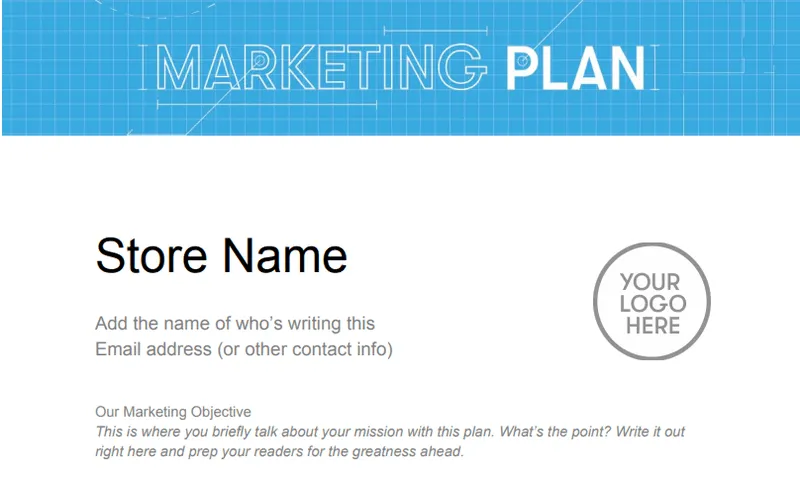
Here’s another great marketing plan example from Drip. This one is a broad overview of each section and has some additional tracking info to fill out, that the other plans didn’t cover. It’s a quick and easy one.
Part 14- Crafting a Killer Social Media Marketing Template
You’re a marketing whiz. You don’t need a whole new marketing plan, you just wanna crush it on social media. So, how do you create a social media marketing plan that really pops? Let’s break it down.
1. Set Your SMART Goals
First things first, you gotta have goals. And not just any goals, SMART goals. That’s Specific, Measurable, Attainable, Relevant, Time-bound.
For example, instead of saying:
- “We’re gonna skyrocket our blog traffic to 100k monthly uniques.”
You’d say:
- “We’re gonna boost our blog traffic by 10% each month for the next year by supercharging our posts to 3,000 words and optimizing on-page content.”
See the difference? The second one has a clear target, a way to measure progress, and a deadline. Deadlines are key, my friend.
2. Pin Down Your Target Audience
Next up, you gotta know who you’re talking to. Dive into your data on Google Analytics or whatever tool you’re using. Get the lowdown on your audience. This could include their age, gender, location, industry, average income, interests, and shopping habits.
3. Scope Out Your Competitors
Keep your friends close and your competitors closer. Check out what they’re doing on social media. What’s working for them? What’s not? Use this intel to up your own game.
4. Crunch Your Social Data
Now that you’ve got the scoop on your competitors, see how you stack up. Look at things like how many followers you have, how much engagement you get, which types of posts are most successful, and when your account gets the most engagement.
5. Pick Your Platforms
Last but not least, choose the right social media platforms for your business. Decide which ones you want to use and what you want to use them for. Maybe one channel is all about impressions, and another is all about engagement.
For example, at Mayple we use:
- Facebook for organic impressions and ads to get new brands and marketing experts signed up.
- Instagram for organic impressions and engagement aimed at marketers.
- LinkedIn for organic engagement and traffic for brand growth.
You might find that Pinterest is the perfect platform to drive traffic, while Instagram is your go-to for sales. It all depends on your industry, design, content format, and type of business.

6. Get some inspiration
Now that you’ve decided on the channels you’re going after, look at some of the best social media posts for your niche and make an inspiration wall for yourself.
Look for posts or videos that catch your eye, designs, color schemes & messaging that would work well for your content.

7. Decide on post types and formats
Next, decide on the exact types and formats of your posts.
Here are a few post formats you could pick from:
- Images
- Videos
- Gifs
- Memes
- Carousel posts
- Instagram Stories
- Audio
- Short-form content
- Long-form content
- Quotes
I recommend deciding on 4-5 formats and testing them out for a few weeks.
8. Create a social media calendar
Now it’s time to put it all together into one calendar.
Use a scheduling app like eClincher, Sendible, CoSchedule, or Later.
They all have different features, so find something that fits your needs and budget.
Once you upload all of your posts into one calendar you can see it all visually, and see your post frequency for each platform.
9. Test for 30-60 days and re-evaluate
Are you excited? It’s time to launch this thing!
Launch your posts for the next 1-2 months and see how they do. After 2 months, re-evaluate your progress, and double down on the posts that did really well.
Take out the posts that didn’t do so well.
Continue optimizing as you go along.
Top Social Media Plan Templates
Here are a few of our favorite social media plan templates. You can use these to plan your calendar, to better optimize your strategy, and to rock out like the top brands out there.
Social Media Audit Template by Hootsuite
This template is a really great general for all of your needs. They have a separate tab for Instagram, Facebook, Twitter, LinkedIn, Snapchat, and Pinterest. Each tab is divided into a grid for all your accounts, performance, audience, goals, and even a SWOT analysis. These guys cover it all!
Get it ->

Recap
We’ve covered pretty much everything you need to know about how to plan, create, and design your digital marketing plan. Your plan should be the basis for all of the marketing initiatives of your marketing department. It should serve as the guideline for creative marketing material, setting up your campaigns, and your plan of action.
We’ve already created a really effective marketing plan template, which you can get – here.

Leave a Reply